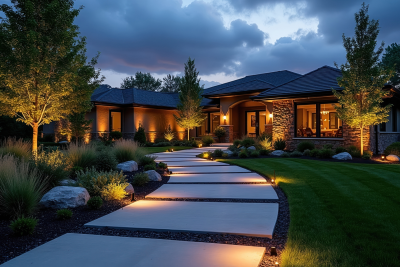
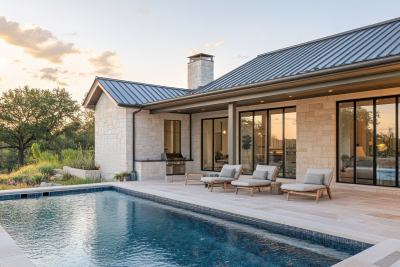
Outdoor lighting is often approached as a practical necessity—a porch fixture by the front door, a few lights along the walkway, perhaps a floodlight over the driveway. But a beautifully designed home shouldn’t disappear when the sun goes down. When thoughtfully designed, exterior lighting can do far more. It can reveal the texture of a stone façade, draw attention to the canopy of a mature oak, create depth across a landscape, and turn a patio or pool into an inviting destination long after daylight fades. And as the days grow shorter and evenings begin a little earlier, those details become increasingly noticeable in the fall to winter seasons.
The best outdoor lighting plans don’t attempt to illuminate every inch of a property. Instead, they use light selectively, creating layers of brightness and shadow that guide the eye through the landscape. Whether you’re considering an exterior update or simply noticing the details you love in other homes, these are some of the techniques that can make a property just as beautiful after dark.
From architectural details and mature trees to pathways and outdoor living spaces, the most effective lighting plans consider how each part of the property comes together. Explore five ways thoughtful lighting can transform a home after dark.
Exterior lighting can completely change the way a home’s architecture is perceived at night. Rather than illuminating an entire façade evenly, consider which elements give the home its character.
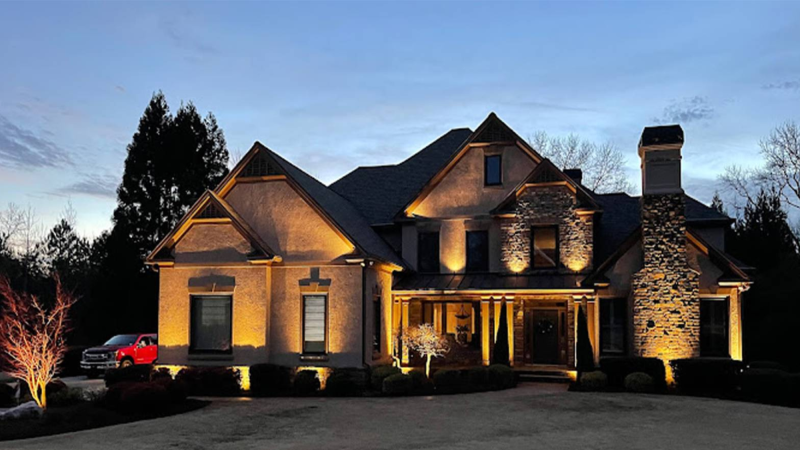
Uplighting directs light from ground level toward architectural features such as columns, arches, rooflines, and entryways. It can create drama and height while drawing attention to details that might otherwise disappear after sunset.
Wall washing produces a softer effect by casting a broader, more even layer of light across a surface. On large exterior walls, this can create a subtle glow without making the home feel overly illuminated.
For stone, brick, and other highly textured materials, grazing can be particularly striking. By positioning a fixture close to the surface, light catches the material’s natural variations and creates small areas of highlight and shadow. On the limestone and masonry commonly found throughout the Texas Hill Country, the effect can be especially beautiful.
The goal isn’t necessarily to make the home brighter. It’s to identify the architectural details worth seeing.
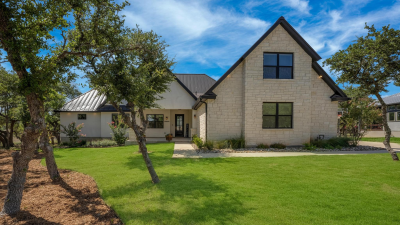
Mature trees and established landscaping often contribute just as much to a property’s character as the home itself. At night, thoughtful lighting can turn those natural features into focal points.
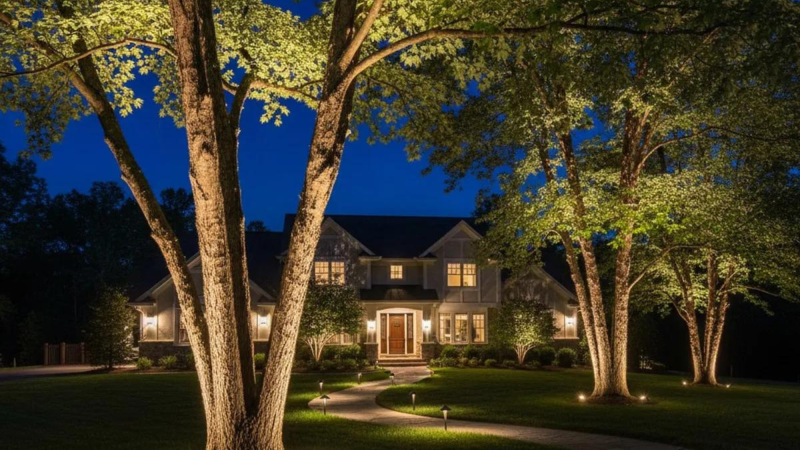
Tree uplighting is one of the most dramatic techniques. Fixtures placed near the base of a tree direct light upward through the trunk and branches, highlighting its shape and creating depth within the landscape. Large live oaks are particularly well suited to this treatment, with sprawling limbs that cast intricate shadows into the canopy.
For a softer effect, consider downlighting, sometimes called moonlighting. Fixtures positioned higher in a tree cast light downward through the branches, creating pools of illumination and natural-looking shadows on the ground below. The result can resemble the effect of moonlight filtering through the canopy.
Garden beds, sculptural plants, fountains, and other landscape features can also benefit from selective lighting. But restraint matters. Illuminating every tree and planting at the same intensity can flatten the landscape rather than enhance it. Allowing some areas to recede into darkness gives the highlighted features more impact.
Of course, lighting can only highlight what’s already there. If you’re looking to build a stronger foundation for your outdoor spaces, explore our guide to Enhancing Texas Luxury Real Estate with Strategic Landscaping for ideas on using thoughtful landscape design to complement your home and property.
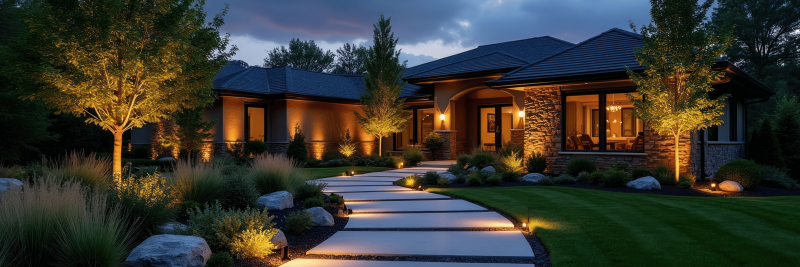
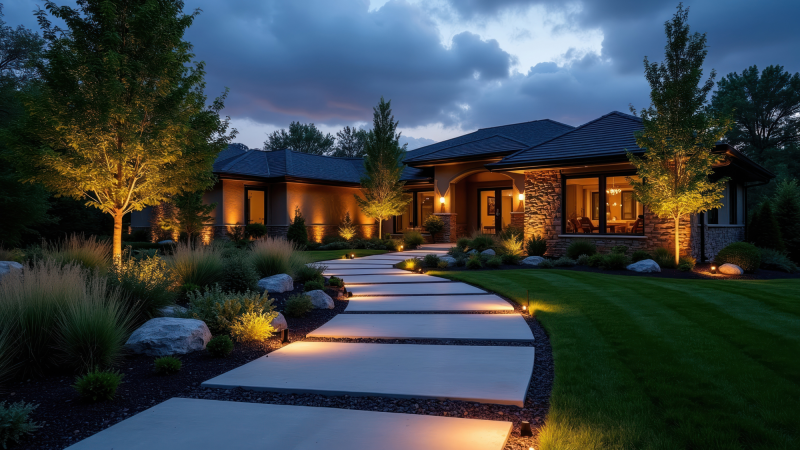
Pathway lighting serves an obvious practical purpose, but it also has an important role in the overall design of a property. Along walkways, low-level path lights can establish a gentle rhythm leading toward an entrance or outdoor living space. Recessed step lights can illuminate changes in elevation without introducing another visible fixture, while subtle lighting along a driveway can help define the approach to a home.
Placement is just as important as the fixture itself. A perfectly symmetrical row of bright lights can make a walkway feel more like a runway than a garden path. Alternating fixtures, varying their spacing, or allowing nearby landscape lighting to provide some of the illumination can create a softer, more natural result.
The objective is simple: guests should intuitively understand where to go without feeling as though every step has been placed under a spotlight.
A well-designed patio, outdoor kitchen, or pool area functions as an extension of the home—and its lighting should receive the same attention as an interior room. Instead of relying on one bright overhead fixture, consider layering different sources of light.
Sconces and pendants can provide ambient illumination, while task lighting around an outdoor kitchen makes prep and entertaining easier. Lighting beneath counters or built-in features can add a subtle architectural glow, and carefully positioned landscape lights can visually connect a patio to the yard beyond.
Around pools and water features, lighting can be particularly transformative. Underwater illumination creates movement and reflection, while nearby landscape lighting helps define the surrounding environment without overwhelming it.
Even decorative string lighting can work beautifully when used intentionally. Draped above a dining terrace or incorporated into a covered outdoor space, it can introduce warmth and intimacy without becoming the primary source of light.
The result should feel much like a thoughtfully designed living room: no single fixture is responsible for everything.
The front entry offers one of the best opportunities to combine function and personality. Traditional sconces flanking a doorway remain a classic choice, but scale matters. Fixtures that are too small can disappear against a large façade, while appropriately proportioned lanterns or pendants can help visually anchor the entrance.
Beyond the fixtures themselves, consider how the entire arrival experience is illuminated. A softly lit walkway, illuminated house numbers, a highlighted tree near the entry, or subtle lighting around a gate can establish a sense of welcome before a guest ever reaches the front door. This is also an opportunity to think beyond brightness. The most memorable entrances often use several restrained sources of light rather than one powerful fixture.
And with fall settling into the Hill Country, lighting is only one way to rethink that first impression. For more seasonal inspiration, revisit Welcome Fall: Entry Design Ideas for Elevated Curb Appeal for ways to bring warmth and character to your home’s entrance.
Choosing beautiful fixtures is only one part of creating an effective lighting plan. Some of the most important decisions involve qualities that are less noticeable individually but make a significant difference when viewed together.
Color temperature. Measured in Kelvin, color temperature describes whether light appears warmer or cooler. Warm light generally creates a softer, more inviting atmosphere around residential architecture and landscaping, while cooler light can appear crisper and more contemporary.
Brightness. More light is not necessarily better light. Overly bright fixtures can create glare, wash out architectural texture, and make surrounding areas appear even darker by comparison. Choosing appropriately sized fixtures, directing light only where it is needed, and minimizing unnecessary light spill can create a more polished result while following the principles of responsible outdoor lighting.
Layers. The most compelling outdoor lighting schemes combine light at several heights and depths—from low pathway fixtures to architectural lighting and illuminated tree canopies. These layers give a property dimension after dark.
Shadow. Darkness is part of the design. Leaving intentional areas of shadow creates contrast, directs attention, and allows illuminated features to stand out. A successful lighting plan isn’t about eliminating darkness; it is about deciding where light matters most.
Fall is an especially fitting time to reconsider the way a home looks after sunset. Daylight begins to fade earlier just as patios, porches, and outdoor gathering spaces become increasingly appealing—and the entertaining season is only beginning.
With Halloween, Thanksgiving gatherings, and the holidays ahead, seasonal lighting and décor will soon add another layer to many homes. A thoughtfully illuminated landscape provides a foundation that can make those temporary additions feel even more intentional. Rather than relying on seasonal lights to create all of the atmosphere, permanent exterior lighting can establish the architecture, pathways, trees, and gathering spaces first. Wreaths, garlands, lanterns, and holiday lights can then become accents within an already beautifully lit setting.
Because great curb appeal doesn’t have to end when daylight does.
Sometimes the features that make a home memorable aren’t immediately obvious on a property description. It might be the mature oak that becomes a focal point after sunset, the covered patio designed for long evenings outside, or an arrival that feels completely different once the landscape lights come on.
If an exceptional outdoor setting is on your wish list—or you’re wondering how your current home could stand out in today’s market—Saunders Luxury Group can help you see the possibilities. Contact us to start the conversation.